As the outdoor industry continues to evolve, retailers and brands are seeing a clear shift in consumer expectations. Today’s outdoor enthusiasts are not just looking for functional gear — they are looking for lighter, stronger, safer, and longer-lasting products that perform reliably in real outdoor conditions.
One category that has gained steady attention in recent years is titanium camping grills. Once considered a niche material reserved for ultralight enthusiasts, titanium is now increasingly adopted by mainstream outdoor brands due to its unique balance of performance, durability, and premium positioning.
For outfitters, brand owners, and importers, understanding where titanium grills fit in the market — and how to select the right designs — is key to building a competitive outdoor cooking lineup.
Why Titanium Has Become a Preferred Material in Outdoor Cooking Gear
Titanium offers a rare combination of properties that make it especially suitable for outdoor use. With a strength-to-weight ratio significantly higher than steel and aluminum, titanium allows grills to remain structurally strong while dramatically reducing weight — often up to 45% lighter than traditional steel alternatives.
Beyond weight savings, titanium is naturally corrosion-resistant and chemically stable. It does not rust, does not react with food, and maintains its performance even after repeated exposure to heat, moisture, and outdoor environments. These qualities directly address common pain points faced by outdoor consumers: gear that is too heavy, degrades too quickly, or raises concerns about food safety.
From a retail perspective, titanium grills are easier to position as long-term investments rather than disposable accessories, helping justify higher perceived value and healthier margins.
Market Demand: Why Lightweight Cooking Gear Matters More Than Ever
Multiple outdoor market studies consistently show that pack weight is one of the top purchasing factors, particularly among hikers, backpackers, and minimalist campers. More than 70% of experienced hikers actively seek lightweight alternatives when upgrading their equipment.
Cooking gear is often one of the first categories where consumers are willing to upgrade — especially when lighter solutions allow them to expand their meal options without increasing pack weight. Titanium grills meet this demand by enabling real cooking (grilling meat, vegetables, or fish) while remaining compact and travel-friendly.
For retailers and distributors, this growing demand creates an opportunity to introduce titanium grills as a premium upgrade within existing outdoor cooking categories.
Main Types of Titanium Camping Grills and Their Use Scenarios
Rather than a single universal design, titanium grills perform best when tailored to specific outdoor use cases. Successful outdoor brands often segment their offerings based on how and where the grill will be used.
1. Ultra-Lightweight Compact Grills
Compact titanium grills weighing around 0.4–0.6 lb are designed primarily for backpackers and solo hikers. These grills are minimal in structure but strong enough to support basic grilling over open flames or portable stoves.
They appeal to users who want more than freeze-dried meals without carrying bulky cookware. Despite their small size, they significantly expand meal possibilities on long-distance trails.
Best suited for:Backpacking-focused retailers, thru-hiking brands, and minimalist outdoor product lines.
2. Foldable Grill and Table Combinations
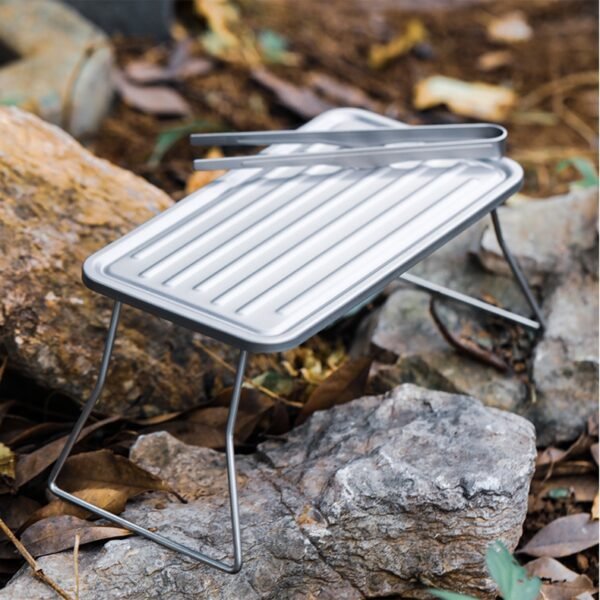
Foldable titanium grills that double as prep or dining tables offer a high level of versatility. Their collapsible structure allows them to pack flat while providing a stable surface for cooking, food preparation, or even casual dining at camp.
This design category resonates strongly with car campers, overlanders, and casual outdoor users who value multi-functionality and efficient use of space.
Best suited for:Camping retailers, lifestyle outdoor brands, picnic and overland-focused product ranges.

3. Dual-Function Grills for Grilling and Frying
Larger titanium grills featuring both perforated grilling surfaces and flat frying plates offer maximum cooking flexibility. While still lightweight (often around 2 lb), these grills allow users to grill, fry, and cook different foods simultaneously.
They are especially popular among families, group campers, and users who view outdoor cooking as a social activity rather than a minimalist necessity.
Best suited for:Family camping markets, premium outdoor cookware collections, and group-oriented outdoor setups.

Why Outfitters and Retailers Favor Titanium Grills
From a business perspective, titanium grills solve several challenges commonly faced by outdoor retailers:
Lower return rates: Durable materials and stable performance reduce user dissatisfaction.
Fewer complaints: Titanium does not rust, peel, or deform easily under heat.
Premium positioning: Titanium products naturally align with high-end outdoor branding.
Many experienced outfitters also recognize that titanium behaves differently from steel. It heats quickly, responds rapidly to temperature changes, and is designed for efficiency rather than heavy heat retention. Brands that communicate this correctly are able to set accurate user expectations and build stronger trust with customers.
Over time, this translates into better product reviews, repeat purchases, and stronger brand loyalty.
Food Safety, Sustainability, and Long-Term Value
In addition to performance, titanium offers advantages that increasingly influence purchasing decisions.
Titanium is non-toxic and food-safe, even at high temperatures. Unlike some coated or alloyed metals, it does not leach harmful substances during cooking. This makes it especially appealing to health-conscious consumers and families.
From a sustainability standpoint, titanium’s long service life reduces the need for frequent replacement. While the initial cost may be higher, the product lifecycle is significantly longer, aligning with the values of environmentally conscious outdoor users.
For brands and retailers, this supports messaging around responsible consumption and long-term value, rather than disposable gear culture.
What Experienced Outdoor Brands Consider When Working With Titanium Grills
Brands with hands-on experience in titanium products understand that material quality alone is not enough. Factors such as material thickness, structural design, folding mechanisms, and edge finishing all affect real-world performance.
Well-designed titanium grills strike a balance between weight reduction and structural stability. When engineered correctly, they maintain shape under heat, are easy to clean, and perform consistently across repeated use cycles.
For retailers and outfitters, these design details often determine whether a product becomes a reliable long-term SKU or a short-lived experiment.
OEM and ODM Solutions for Titanium Camping Grills
As an OEM/ODM manufacturer specializing in titanium outdoor cookware, we work closely with outdoor brands, retailers, and importers to develop grills that meet both performance expectations and commercial requirements.
Our capabilities include:
Custom logo engraving and branding
Low minimum order quantities, suitable for market testing
Consistent quality control across production batches
Designs optimized for real outdoor use, not just visual appeal
Whether you are expanding an existing product range or launching a new outdoor brand, we support the entire process — from design refinement and sampling to mass production.
Building a Stronger Outdoor Cooking Category
Titanium camping grills are no longer a niche product. They have become a strategic category for outdoor brands looking to differentiate themselves through performance, durability, and thoughtful design.
If you are exploring opportunities to add titanium grills to your lineup — or develop a customized solution under your own brand — we are happy to discuss your goals and provide tailored manufacturing support.
Contact us to learn more about customization options, wholesale pricing, and production timelines, and explore how titanium grills can strengthen your outdoor product portfolio.