Titanium has become one of the most trusted materials in outdoor cookware and tableware. From titanium cups and spoons to stoves and grills, it is valued for being lightweight, corrosion-resistant, and safe for food contact.
As demand grows, however, the market has also seen an increasing number of products sold as “titanium” but made from other metals or mixed materials. In many cases, the issue is not titanium grade—it is whether the product is truly made from pure titanium at all.
This article focuses on practical, real-world ways to identify genuine pure titanium, especially for tableware and outdoor products, without relying on expensive laboratory testing.
What Is Titanium?
Titanium is a metallic element known for its excellent strength-to-weight ratio and outstanding corrosion resistance. These properties make it ideal for applications where durability, low weight, and safety are critical—such as outdoor cookware, tableware, medical devices, and aerospace components.
Titanium is naturally found in minerals such as rutile and ilmenite, which are refined into metallic titanium for industrial use.
For a general scientific overview of titanium as an element, you can refer to:
https://en.wikipedia.org/wiki/Titanium
In food-contact and outdoor products, titanium is appreciated because it is:
- Lightweight yet strong
- Naturally corrosion-resistant
- Non-toxic and safe for food use
- Stable under high temperatures
Pure Titanium vs. “Titanium-Like” Products
In many industries, titanium is discussed in terms of grades and alloys. However, titanium tableware and cookware are made from commercially pure titanium, not titanium alloys.
Alloyed titanium often contains elements such as aluminum or vanadium. While suitable for aerospace or structural applications, these alloys are not used for food-contact tableware.
The real issue in the market is different:
Some manufacturers use stainless steel, mixed alloys, or coated metals, and sell them as “pure titanium.”
That is why understanding how to identify genuine titanium matters.
Why Identifying Genuine Titanium Matters
When a product is sold as titanium but made from other materials, it can lead to:
- Misleading product claims
- Customer complaints and returns
- Long-term damage to brand trust
- Safety concerns for food-contact items
Knowing how to identify pure titanium helps buyers make confident sourcing decisions and avoid unnecessary risks.
How to Identify Genuine Titanium (Practical Methods)
Below are commonly used, non-laboratory methods for identifying pure titanium in tableware and outdoor products.
1.Weight Test
Titanium is significantly lighter than stainless steel.
If a product feels unusually heavy for its size, it may not be titanium. While weight alone cannot confirm authenticity, it is often the first signal that further checks are needed.
2.Magnet Test
Pure titanium is non-magnetic.
Use a magnet to test the product:
- If the magnet does not stick to the surface or interior, it may be pure titanium
- If the magnet does stick, the product is not pure titanium and likely contains stainless steel or other magnetic alloys
This is one of the simplest and most effective screening methods.
3.Density Test
Pure titanium has a density of approximately 4.51 g/cm³.
To test this:
- Measure the weight of the product using a scale
- Place the titanium item into a graduated container filled with water and record the volume increase
- Divide the weight by the measured volume
If the result is close to 4.51 g/cm³, the product is very likely made from pure titanium.
⚠️ This method is suitable for single-wall cups or solid items such as titanium spoons, chopsticks, or solid-handled cups.
It is not suitable for double-wall insulated cups, as the internal air or vacuum layer affects volume measurement and leads to inaccurate results.
4.Ceramic Scratch Test
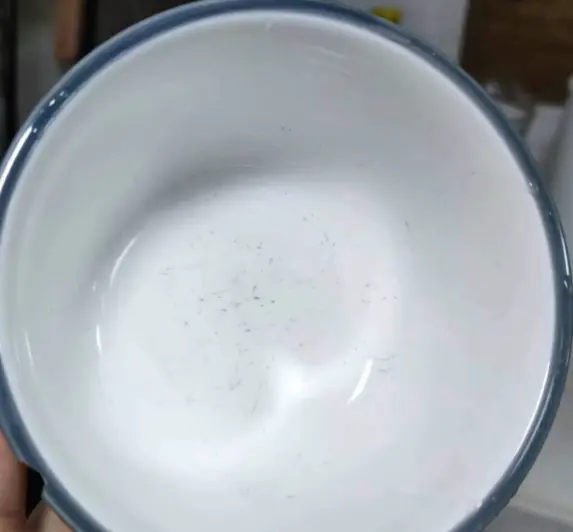
Lightly scratch the titanium product across a white ceramic surface, such as the bottom of a ceramic bowl.
If it leaves a clear gray or dark gray mark, the product is very likely pure titanium.
Many other metals leave only very faint marks or no visible mark at all.
5.Heat Color Test (Flame Test)
When exposed to direct flame or high heat, pure titanium naturally changes color, forming golden, blue, or purple hues on the surface.
This color change is caused by natural oxidation layers formed by heat, not by paint or coating.
Fake or coated products may burn unevenly, discolor irregularly, or show visible damage to the surface layer.
6.Examine Manufacturing Details and Surface Finish
Pure titanium products are usually well-finished, with:
- Clean, fine weld lines that are often very thin, almost hairline-like
- Smooth edges and consistent surface texture
- No heavy oxidation marks around joints
In recent years, titanium products with a frosted or “ice-crystal” surface finish have become popular. When this texture is created on pure titanium, the pattern appears natural and evenly distributed, and the surface feels solid and metallic to the touch.
By contrast, products made from other metals and coated to look like titanium often show:
- Unnatural or repetitive surface patterns
- A noticeable coating feel when touched
- Uneven texture, raised spots, or grainy areas due to inconsistent coating
These details are often difficult to hide and can clearly indicate whether a product is genuinely made from pure titanium.

7.Spectrometer Testing (Advanced Method)
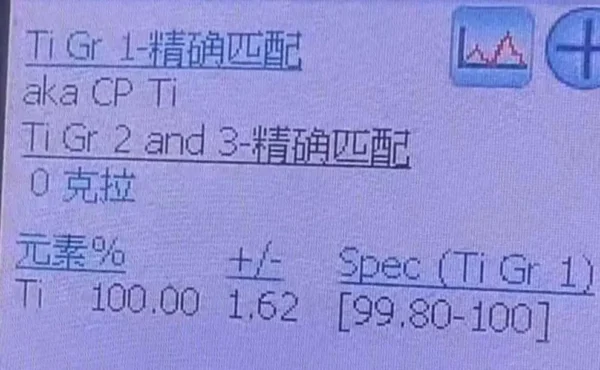
A spectrometer can accurately identify material composition.
When tested, pure titanium typically shows Ti ≈ 100%.
However, spectrometers are expensive and usually not practical for everyday sourcing. This method is mainly used in laboratories or production facilities.
FAQ
What titanium products do you offer?
We supply a wide range of titanium products, including:
- Titanium cups and mugs
- Titanium spoons, forks, and chopsticks
- Titanium bowls and tableware sets
- Titanium outdoor cookware
- Titanium backpacking stoves and wood stoves
- Titanium grills and BBQ racks
Do you offer customization?
Yes. We support OEM and ODM customization, including:
- Logo marking
- Packaging customization
- Product design adjustments
What is your minimum order quantity?
For standard, non-customized products, we usually keep stock and offer low and flexible minimum order quantities, depending on your needs.
For customized products, MOQ varies based on design and specifications.
Can I request samples?
Yes. Samples are available so you can evaluate material quality, finishing, and performance before placing bulk orders.
Final Thoughts
Pure titanium offers real benefits—but only when the product is truly made from titanium.
By understanding practical identification methods and paying attention to material details, buyers can avoid misleading products and build long-term confidence in their sourcing decisions.
Get in Touch
If you are sourcing titanium tableware, outdoor cookware, or titanium stoves and grills, and would like to discuss product details, customization options, or sample requests, you are welcome to [contact us here].
You can also explore our full range of titanium products by visiting [our titanium product collection].
We are happy to support your sourcing needs with practical solutions, flexible order quantities, and reliable supply.